What is the best way to start trading binary options as a complete beginner?
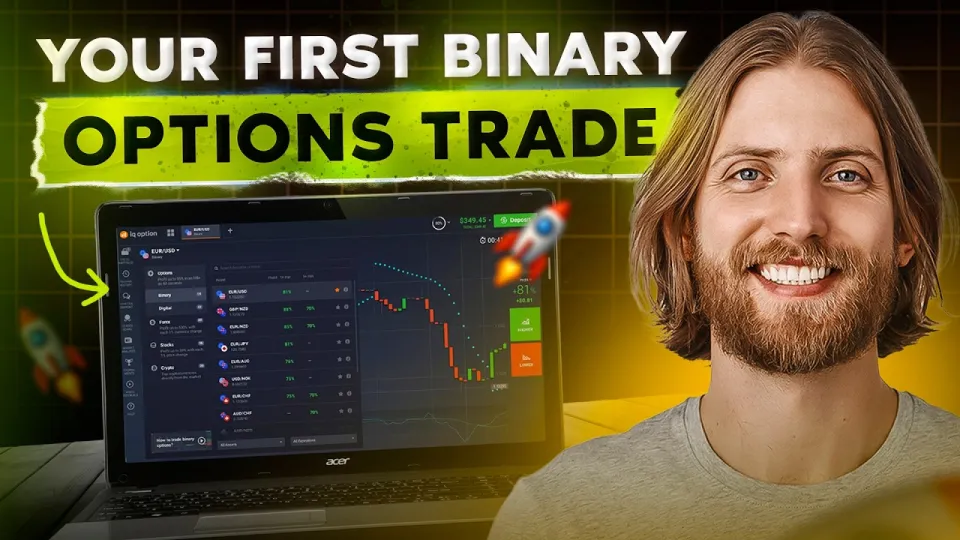
Video: Binary Options | Binary Options Tutorial for Beginners | Where Should You Start?
The fastest way to start with binary options is to open a demo account on a regulated-as-possible broker such as Quotex, learn one asset and one expiry time, and trade a fixed 1–2% of your capital per position until you have at least 100 logged trades. Binary options are a fixed-risk instrument: you either win a set payout or lose the stake, so the skill is not predicting the market perfectly but managing the payout math, position size and discipline.
What a binary option actually is and how the payout works
A binary option is a contract with only two outcomes: you predict whether the price of an asset will be above or below the current level at a set expiry time, and the broker pays a fixed percentage if you are right or keeps your stake if you are wrong. Typical payouts sit between 70% and 95%, which means a $10 trade returns $17–$19.50 on a win and $0 on a loss.
That asymmetry defines everything. With an 80% payout you need a win rate above roughly 55.6% just to break even, because one loss wipes out more than one win. With a 90% payout the break-even rate is about 52.6%. Any strategy that wins less than half of its trades on a 70% payout is guaranteed to drain the account, no matter how good the entries look. This is why serious beginners track their results in a spreadsheet from day one instead of judging by feel.
How to choose a binary options platform for a first account
The practical checklist for a first broker is: a demo account, low minimum stakes, a visible payout percentage before you click, and fast withdrawal processing. The video breakdown from the channel Binary options tutorial for beginners points to three platforms that meet the basic requirements for beginners: Quotex, Pocket Option and Binarium. All three offer demo balances, stakes from around $1, and expiries from 5 seconds to a full day.
- Register and confirm the account, then stay on demo for at least two weeks.
- Check the payout on your chosen asset before each session; it changes daily.
- Test the withdrawal process with a small amount early, not after six months of profits.
- Confirm which regulator, if any, supervises the broker and whether binary options are legal where you live.
Where should a beginner start: the first four steps
The first month should be about repetition, not profit. Pick a single liquid asset — EUR/USD or gold are the usual starting points — and a single expiry, usually 5 minutes, so that you can build a sample of results instead of scattering attention across dozens of markets.
- Learn the chart basics. Support and resistance, the previous day's high and low, and simple candlestick patterns cover most of what a 5-minute expiry needs.
- Choose one strategy and test it on demo. A trend-following pullback entry or a level-bounce entry is enough; switching strategies every day produces no usable data.
- Log every trade. Asset, direction, expiry, payout, result and the reason for entry. After 100 trades the pattern in that log tells you more than any indicator.
- Go live with the minimum stake. Trade $1–$5 per position until you have 50 live trades with a stable win rate, then scale slowly.
Position sizing and the math that kills most accounts
Risking 1–2% of the balance per trade is the only sizing rule that survives a normal losing streak. Ten consecutive losses happen regularly at a 55% win rate, and with 10% stakes that is the whole account gone. With 2% stakes the same streak costs about 18% of capital, which is recoverable.
Martingale — doubling the stake after a loss — is the single most common reason beginners blow up. It works until it doesn't: a run of six or seven losses on a 70% payout requires a stake 64 to 128 times the original, which exceeds most account balances and every broker's maximum trade size. Fixed fractional sizing with a hard daily loss limit of 5% is a slower but survivable approach.
Typical beginner questions and doubts
The most frequent doubts are about demo versus live trading, the reliability of payouts, and whether a strategy can be copied from someone else. Demo is for learning mechanics and testing a rule set; it does not reproduce the emotional pressure of real money, so the switch should be gradual and with minimum stakes. Payout percentages are set by the broker and can differ by 10–20 points between platforms on the same asset, which directly changes the break-even win rate, so comparing payouts is part of platform selection. And a copied strategy rarely works without the trader's own testing, because entry rules that look identical on a screenshot depend on context — session timing, volatility and news.
Another recurring theme is withdrawal friction. Verify the account and test a small withdrawal within the first weeks, keep records of deposits, and read the bonus terms: a deposit bonus usually comes with a turnover requirement measured in trade volume, which can lock funds far longer than expected.
Regulation and risk in 2026
Binary options are prohibited for retail clients in the European Union, the United Kingdom, Israel, Australia and several other markets, and many brokers serving those regions operate offshore. That means no compensation scheme, no dispute resolution and real counterparty risk. Before any deposit, check whether the product is legal where you live, whether the broker publishes its licensing details, and whether the payout terms are written down rather than shown only in the interface. Treat the entire deposit as money you can afford to lose — the structural edge of the payout model means the majority of retail accounts finish negative.
All platforms and tools mentioned in the breakdown
- Quotex: https://dakaklik.com/_quotex?creative_id=WzzpYsjS3ps
- Pocket Option: https://dakaklik.com/_PocketOption?creative_id=WzzpYsjS3ps
- Binarium: https://dakaklik.com/_Binarium?creative_id=WzzpYsjS3ps
- NordVPN: https://dakatop.link/Nord_us?creative_id=WzzpYsjS3ps
Summary
Binary options reward discipline over prediction: fixed payouts mean the break-even win rate sits near 53–56%, so position sizing at 1–2% per trade and a single tested strategy matter more than any signal. Start on demo with one asset and one expiry, log at least 100 trades, then go live with minimum stakes and a hard daily loss limit. The video breakdown by the channel Binary options tutorial for beginners walks through the same starting sequence and links the three platforms above. If you want to test the workflow today, open a Quotex demo account and run one strategy for two weeks before risking real money.
Key takeaways
- A binary option pays a fixed percentage (typically 70–95%) if your prediction is right and returns zero if it is wrong, so a 60% win rate on an 80% payout is roughly break-even.
- The three platforms promoted with the video are Quotex, Pocket Option and Binarium, all reachable through the links in the description.
- Most binary brokers set a minimum trade of $1–$5 and offer demo accounts with virtual funds for testing a strategy.
- Expiry times range from 5–30 seconds on turbo trades up to 1 hour or a full day on standard contracts.
- Binary options are banned for retail traders in the EU, the UK, Israel and several other jurisdictions, so check local rules before depositing.
Questions & answers
How much money do I need to start trading binary options?
Most brokers set a minimum deposit between $10 and $50 and a minimum trade of $1–$5, so a practical starting balance is $100–$200 at 1–2% risk per trade. That gives you 50–100 positions to build a real sample of results without risking money you cannot afford to lose.
Are binary options legal where I live?
It depends on the jurisdiction. They are banned for retail traders in the EU, the UK, Israel and Australia, while many brokers serving those regions operate under offshore licences. Check your local regulator's rules before registering, and treat any offshore account as carrying counterparty risk.
Is it better to learn on a demo account or go straight to live trading?
Learn the mechanics and test one strategy on demo first, because it costs nothing and lets you log 100 trades quickly. Then switch to live with the minimum stake, since demo does not reproduce the emotional pressure of real money and the final step has to be taken with small size.
Why do I keep losing even when most of my trades are correct?
The payout structure explains it: at a 70% payout you need more than about 59% wins just to break even, and one loss cancels more than one win. Oversized stakes and martingale recovery make it worse, so track your win rate and average payout before changing strategy.
Source: Binary Options | Binary Options Tutorial for Beginners | Where Should You Start? · Markdown version